

Granule Services
Full Stack Developer & AI Engineer
Leading AI powered applications built with Python and React.
Karachi, Pakistan
Hello, I'm
Forward Deployed Engineer · Full Stack & AI · Remote-first
I embed with your team, learn how the work actually gets done, and ship the system that does it, end to end, in production.
50+
Projects
9+
Brands
3+
Years
19+
Technologies
 ClaudeClaude
Modern solutions that drive growth and scale with you.

A WhatsApp bot that transcribes incoming voice notes and replies with context-aware answers from OpenAI GPT models, built in Python on the WhatsApp Business API.
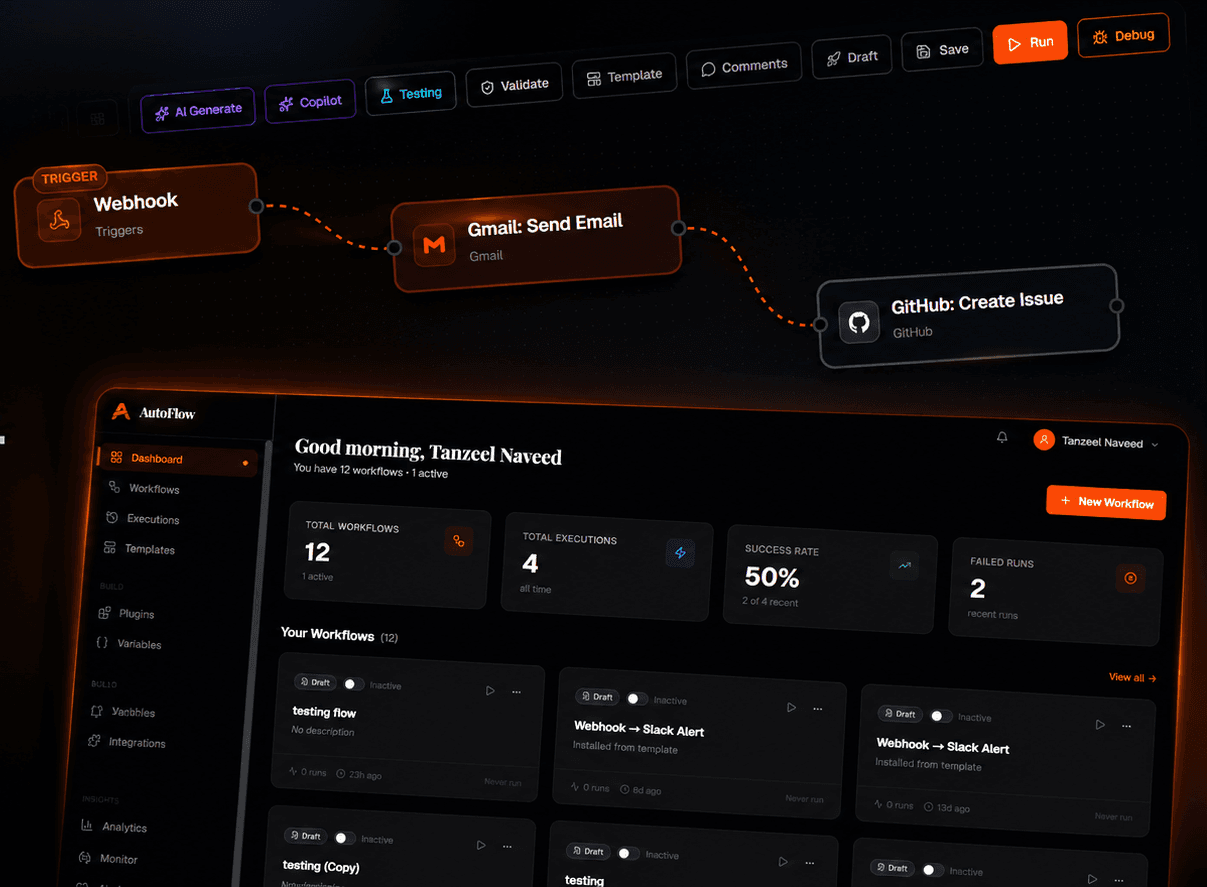
No-code workflow automation platform with a visual builder, AI assisted workflow generation, and a live dashboard for tracking executions and success rates.
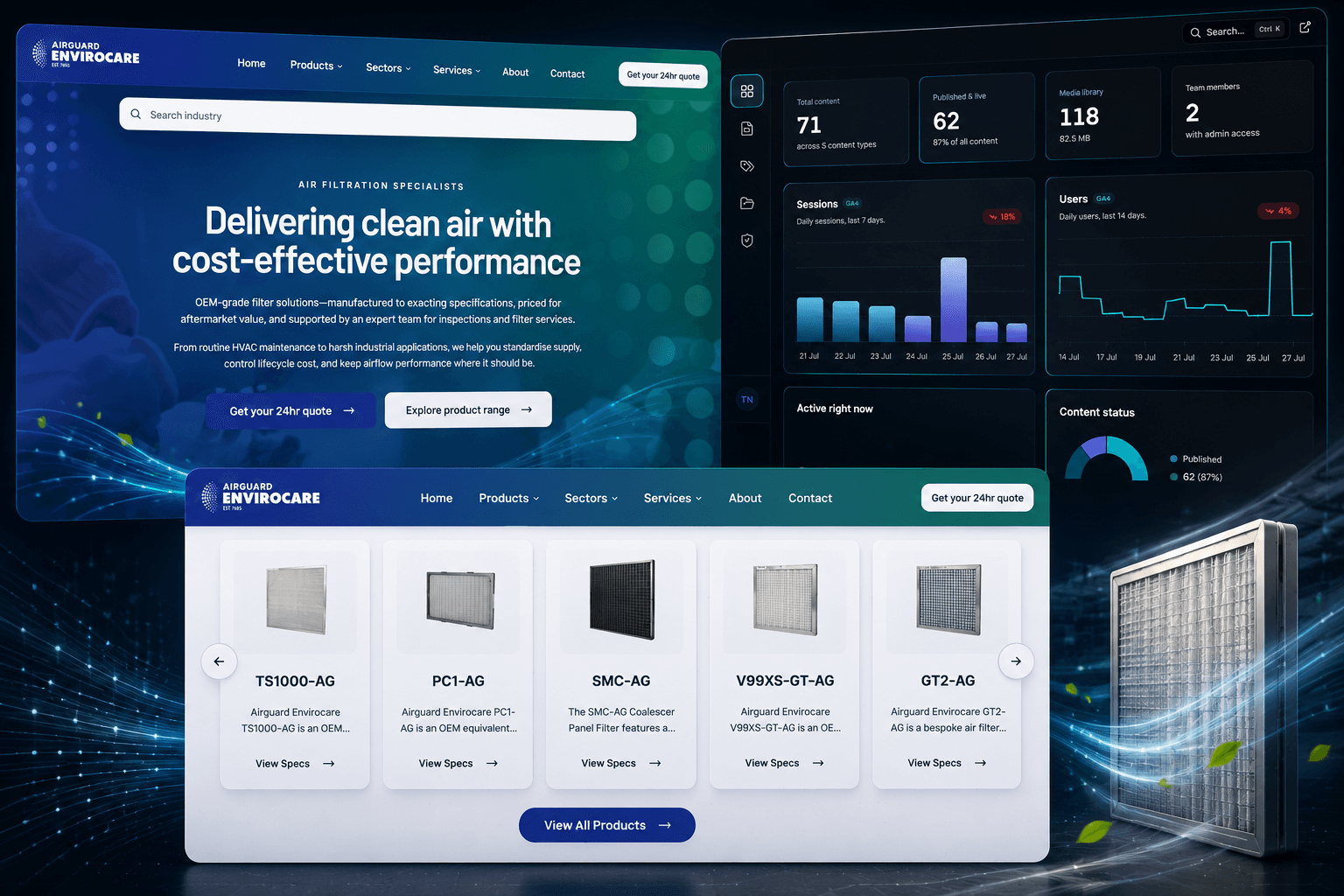
Corporate site for a UK air filtration manufacturer with a full product catalog, sector pages, and a built in dashboard for tracking content and traffic.

End-to-end ERP for car rental businesses: fleet, bookings, billing and maintenance as four bounded modules, with GPS telemetry on a separate ingestion path.

AI support automation with ticket routing, sentiment analysis and confidence-gated responses that escalate to a human instead of shipping a wrong answer.

Real-time chat with group conversations, media sharing and voice notes, on a room-based socket model that keeps delivery decoupled from message persistence.
A couple of the engineering problems behind these projects, and the decisions that kept them from becoming the usual mess.
AI Systems
The hard part of support automation is not producing an answer. It is deciding when not to answer, and when to hand the conversation to a human.
AI Systems
Automatic transaction categorization is worthless unless the user can correct a wrong call, and the system keeps that correction.
Five things, each with its own page and its own projects behind it.
Forward deployed with innovative companies across the globe, inside their teams, their codebases and their constraints.
Full Stack Developer & AI Engineer
Leading AI powered applications built with Python and React.

Full Stack Engineer
Built the corporate site for a UK air filtration manufacturer: product catalogue, sector pages, quote requests and a content and traffic dashboard.

Full Stack Engineer
Building and maintaining full stack features across the product end to end.

Full Stack Engineer
Building and maintaining full stack features across the product end to end.

Backend Engineer
Backend for an ESG verification platform, storing every metric with its source, timestamp and verification status so reports stay traceable.

Backend & AI Engineer
Leading development of modern web, mobile, and software solutions for enterprise clients worldwide.

Full Stack Developer
Full stack work on the agency’s own site and ecommerce builds, with portfolio and services rendered from structured content for search.

App Developer
Providing specialized technology solutions and strategic consulting services.

Backend Engineer
Backend for a luxury perfume ecommerce store: catalogue, cart state and payment gateway.
“Working with Tanzeel was a great experience. He understood what we needed and delivered a clean, modern website. Really happy with the final result.”

Ahmed Raza
Founder, Ozzoro
“Tanzeel did a great job on our project. The website looks professional, works smoothly, and feels much better than what we had before. Very satisfied with his work.”

Talha Mehmood
Co-founder, Greyn
“Tanzeel understood the automation we needed and built a solution that made the whole process much easier. Very happy with how everything turned out.”

Harry Wilson
Business owner, Bulk Receipt Scanner
“Tanzeel handled the development work really well. He improved the platform, built the admin functionality, and connected the required integrations. Very happy with his work.”

Fahad Ali
Operations manager, Aviore
“Tanzeel made a big improvement to our Shopify store. He worked on the SEO, customer journey, product pages, and overall experience. The store feels much more polished now.”

Iqra Iqbal
Brand owner, Iqra Iqbal Official
Everything people usually want to know before starting a project.
A Forward Deployed Engineer embeds inside the customer's team rather than working behind a ticket queue. They learn the real workflow first hand, then design, build, deploy and iterate the system in the customer's own environment until it holds up against real users and real data.
Yes. FDE is how the engagements here run: he joins your team, tools and codebase, watches the workflow being done, then ships the system end to end in your environment. It is the same person doing discovery, architecture, implementation and the iteration after launch.
Roughly three phases. Deploy in: time with the people doing the work, inside your repo and tooling. Ship a narrow slice: one real path working end to end, early. Widen and harden: automate the routine path, route exceptions to a person, instrument everything, hand over documented.
A contractor builds to a specification you wrote; an FDE helps you find out what the specification should have been, because they are in the room while the problem happens. There is also no handoff: the person who understood the problem is the person who writes and deploys the code.
Cost follows scope, so it is quoted per project rather than from a rate card. Most engagements run one of two ways: a fixed price against an agreed scope, or an ongoing contract when the work is continuous. Send the problem you are solving and you will get a scoped estimate back.
Both. Plenty of the work here is an addition to something already running rather than a rewrite, including custom booking logic built as a WordPress plugin so a theme update never touches it. The first step on existing code is reading it and telling you honestly what shape it is in.
Remote-first, with clients worldwide, from Karachi, Pakistan. Work is handed over in writing rather than depending on a shared working window, so progress does not stall waiting for an overlap. Project enquiries usually receive a reply within one working day.
Across the projects documented on this site: AI support and categorization systems, payroll and ERP platforms, healthcare booking, ecommerce and marketplaces, real-time chat, fleet and logistics tooling, ESG reporting, and manufacturer catalogues. The engineering write-up for each one is on the Impact page.
Tanzeel Naveed Khan is a Forward Deployed Engineer (FDE), full stack developer and AI engineer who builds AI-native web applications and intelligent automation systems embedded with the client's team. He works across the whole stack, from Next.js and React front ends to Python and Node.js back ends, and ships from concept through to deployment.
Forward deployed engineering (FDE) engagements, full stack web development, AI agent development and workflow automation. That covers embedding with a client team, building custom web applications, integrating AI models such as OpenAI and Claude into products, connecting payments and databases, and architecting systems designed to scale.
His core stack is Next.js, React, TypeScript and Tailwind CSS on the front end, with Node.js and Python on the back end. He also works with MongoDB, Firebase and Stripe, and builds AI features using the OpenAI and Claude agent APIs.
Yes. He is currently available for new projects and forward deployed engineer (FDE) roles, and works remote-first with clients globally. Engagements range from single-feature builds and AI integrations to embedding with a team and delivering a complete application end to end, on either a project or ongoing contract basis.
The fastest route is the contact form on this site, which sends the message straight to his inbox, or email through the contact page. He is also reachable on WhatsApp and LinkedIn. Project enquiries usually receive a reply within one working day.
Have a project in mind? Choose your preferred way to connect. I reply within one working day.
Operating Globally · Remote-First · Available Worldwide